

Clickbait – what are the risks of deceptive headlines?
We've all encountered clickbait at some point. Misleading, deceptive headlines that promise the world. They're annoying and completely unnecessary, and they can do more harm than good to the websites that use them. Let's take a closer look at the dangers of clickbait.
Clickbait - what is it?
Clickbait, a term that literally translates to "click incentive", is a common online tactic used to lure users into clicking on a link. These headlines often make exaggerated or misleading promises, creating unrealistic expectations. Once a user clicks, they often find that the content is underwhelming and doesn't live up to the hype.
Clickbait is most commonly used in headlines, but also in anchor text (the clickable text of a link). The idea behind this strategy is to increase the number of clicks at the expense of the website's reputation and the quality of the content provided.
Clickbait headlines rely on emotions, sensationalism, and controversy. They aim to intrigue, tempt, and arouse interest. The fact that the content itself lacks value is secondary in this case. Clickbait is a very negative phenomenon, and internet users have a clear dislike for it.
The dangers of clickbait
Misleading headlines give rise to a multitude of adverse effects. Foremost among these are:
Clickbait and search engine penalties
Search engines may penalize websites that consistently use clickbait tactics. Websites with misleading headlines can expect to see a decline in their search engine rankings. In some cases, search engines may even apply a filter to reduce the visibility of these sites in search results.
Clickbait examples
Having explored the definition and risks associated with clickbait, let us examine several examples. It is imperative to emphasize that these examples represent the anti-pattern for headline writing.
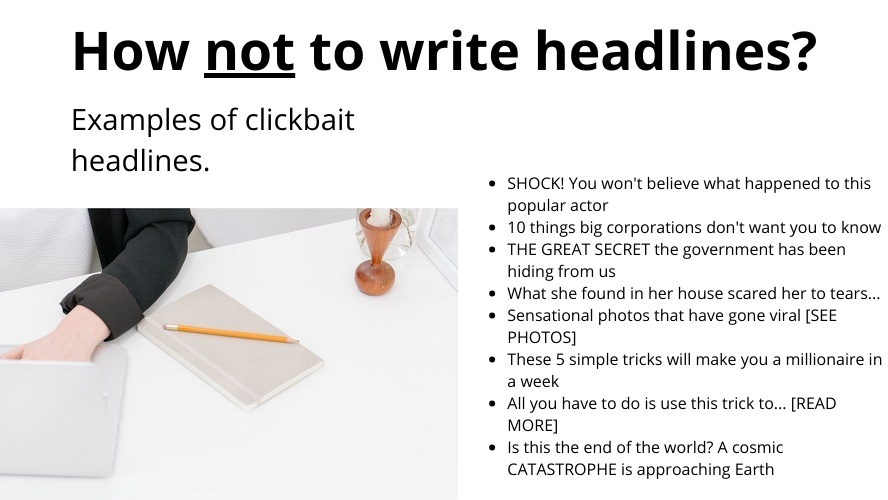
Examples of clickbait headlines
To summarize: we have consistently highlighted the importance of creating content that is both valuable and useful to the audience. Headlines that make false promises are a deceptive practice. Consequently, when crafting headlines, it is essential to ensure they are truthful and accurately reflect the content.
➡️ Read also: Keyword stuffing: Why less is more when it comes to keywords
Check out our professional services and see how we can help your business.

Jan Wojciechowski
Content Marketing Specialist
Content Marketing Specialist with several years of experience. Studied Marketing and Management on the University of Warsaw. In his work he tries to combine his writing skills, content knowledge and passion for new technologies. Privately he likes to do sports, read books and illustrate them.